
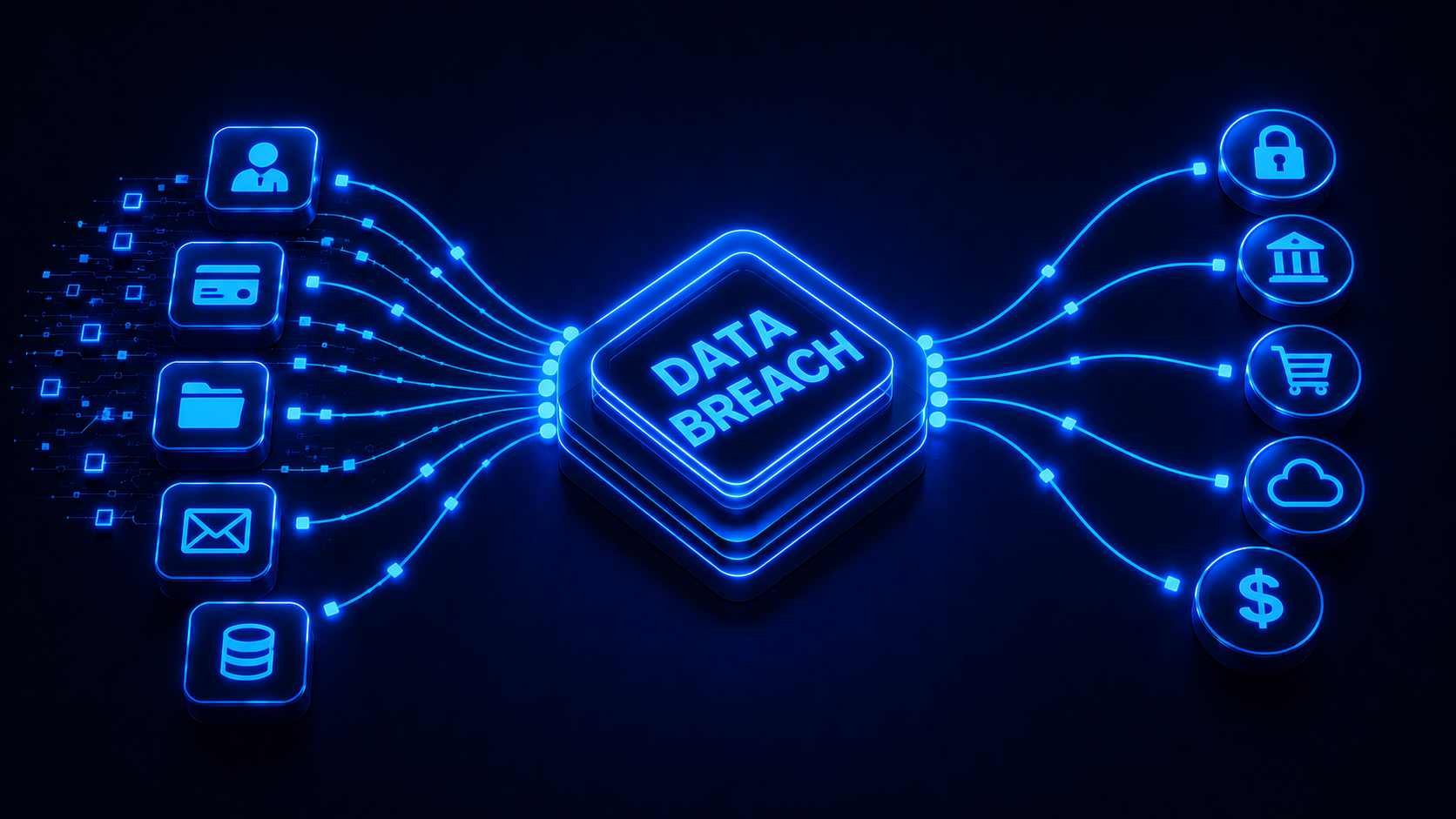
Whenpeople picture a data breach, they usually picture a massive corporation withheadlines splashed across national news. In reality, small and mid-sizedbusinesses (SMBs) are hit far more often, and the consequences can be even moresevere relative to their size. A breach that a large enterprise absorbs as aline item on a budget can be an extinction-level event for a smaller company.
Thisarticle breaks down what a data breach actually costs a small or mid-sizedbusiness, why SMBs are targeted so heavily, and what you can do to reduce yourexposure before an incident happens rather than after.
Why Small and Mid-Sized Businesses Are Prime Targets
It'sa common misconception that cybercriminals only go after large, high-profileorganizations. In practice, the opposite is often true. SMBs are attractivetargets for several specific reasons:
- Weaker securityinfrastructure: Smaller businesses often lack dedicated security teams,advanced monitoring tools, or formal incident response plans
- Limited budgets forcybersecurity: Security spending frequently gets deprioritized in favor ofgrowth initiatives, leaving gaps attackers can exploit
- Access to largerpartners: SMBs are often used as a stepping stone to breach larger enterprisepartners and vendors they work with
- Valuable data at a lowercost to attack: Customer records, payment data, and employee information arejust as valuable to sell or exploit, regardless of company size
- Automated, opportunisticattacks: Many attacks aren't targeted at all. Automated scanning tools look forany exposed vulnerability, and company size doesn't factor into the equation
Attackersknow that smaller companies are less likely to have layered defenses in place,which makes them easier and faster to compromise than a well-resourcedenterprise.
Breaking Down the Real Costs of a Breach
Thecost of a data breach extends far beyond the immediate technical cleanup. ForSMBs in particular, the financial impact often touches nearly every part of thebusiness.
1. Direct Incident Response and Recovery Costs
Thefirst costs a business faces after a breach are the immediate technicalresponse expenses:
- Forensic investigationto determine how the breach occurred and what was accessed
- IT costs to contain theincident, remove attacker access, and rebuild affected systems
- Emergency staffing orcontractor costs if internal teams don't have the expertise to respond
- Costs to restore datafrom backups, assuming clean, unaffected backups exist
Fora small business without a dedicated security team, these costs are oftenoutsourced entirely, and emergency response rates from incident response firmstend to be significantly higher than standard consulting rates.
2. Legal and Regulatory Costs
Dependingon the type of data exposed and where your customers are located, a breach cantrigger legal obligations that carry real financial weight:
- Mandatory breachnotification costs, including legal counsel to determine notificationrequirements
- Regulatory fines underdata protection laws, which increasingly apply to businesses of any size
- Potential lawsuits fromaffected customers, employees, or business partners
- Costs of providingcredit monitoring or identity theft protection to affected individuals
ManySMB owners are surprised to learn that data protection regulations rarely carveout exceptions for smaller companies. If you handle personal data, you'regenerally held to the same notification and protection standards as a largerenterprise.
3. Business Disruption and Downtime
Whilesystems are being investigated and restored, normal business operations oftengrind to a halt. For SMBs, this can mean:
- Inability to processorders, payments, or customer requests
- Lost productivity whileemployees are locked out of affected systems
- Delayed deliverables andmissed deadlines with clients
- Emergency spending ontemporary infrastructure or manual workarounds
Unlikea large enterprise with redundant systems and dedicated failoverinfrastructure, many SMBs run lean, meaning a single compromised system canbring core operations to a complete stop.
4. Reputational Damage and Customer Loss
Trustis often a small business's biggest asset, and it's one of the hardest thingsto rebuild after a breach. Customers who learn their data was exposedfrequently take their business elsewhere, and word spreads quickly, especiallyin tight-knit local markets or specific industries.
Reputationaldamage can show up as:
- Existing customerschurning to competitors
- Difficulty acquiring newcustomers who've heard about the breach
- Negative reviews andsocial media attention that outlast the actual incident
- Loss of trust frombusiness partners or vendors who require security assurances
5. Increased Insurance Premiums
Businessesthat carry cyber insurance often see premiums rise significantly after filing aclaim, and some insurers may decline to renew coverage altogether. Others mayrequire costly security improvements as a condition of continued coverage,adding another layer of unplanned expense.
6. Loss of Intellectual Property or Competitive Advantage
Forbusinesses that rely on proprietary processes, product designs, client lists,or trade secrets, a breach can mean direct competitive harm. Once thatinformation is in the wrong hands, there's often no way to fully undo thedamage, and competitors or bad actors may use it against you directly.
Why the Impact Hits Harder for SMBs Than Enterprises
Theraw dollar figures involved in a breach are often smaller for an SMB than for alarge enterprise, but the relative impact is frequently much greater. Considerthe difference in context:
- A large enterprise mayhave millions in cash reserves and can absorb breach costs as a manageable, ifpainful, expense
- A small business oftenoperates on thin margins, meaning even a moderate, unplanned expense canthreaten cash flow and payroll
- Enterprises typicallyhave dedicated legal, PR, and IT teams to manage the response. SMBs often haveto build this capacity from scratch during the crisis itself
- Recovery time is longerrelative to the business's size, meaning the operational disruption has moretime to compound into lost revenue and lost customers
Industrydata consistently shows that a meaningful percentage of small businesses thatexperience a serious breach either close permanently or are forced to shut downwithin a year of the incident. The costs listed above rarely arrive one at atime. They compound, often simultaneously, during the same stretch of weeks ormonths.
Reducing Your Risk Before a Breach Happens
Thegood news is that SMBs don't need enterprise-level budgets to significantlyreduce breach risk. Several foundational steps go a long way:
Implement Basic Security Hygiene
- Enforce multi-factorauthentication (MFA) across all accounts, especially email and financialsystems
- Keep software, operatingsystems, and firmware updated with the latest security patches
- Use a password managerand require strong, unique passwords across all systems
- Limit employee access toonly the data and systems they need for their role
Back Up Data Properly
- Maintain regular,automated backups stored separately from your main network
- Test backup restorationperiodically to confirm backups actually work when needed
- Keep at least one backupcopy offline or immutable to protect against ransomware
Train Employees on Security Awareness
- Run regular phishingsimulation exercises to build awareness of common attack tactics
- Teach employees how torecognize suspicious emails, links, and requests for sensitive information
- Establish clearprocedures for verifying unusual requests, especially those involving paymentsor credentials
Invest in Monitoring and Detection
- Consider a ManagedDetection and Response (MDR) provider if you lack the resources for an internalsecurity team
- Enable logging andalerting on critical systems so suspicious activity doesn't go unnoticed
- Set up automated alertsfor unusual login attempts, data transfers, or permission changes
Prepare an Incident Response Plan
- Document clear steps forwhat to do in the first hours after a suspected breach
- Identify who needs to becontacted internally and externally, including legal counsel and, ifapplicable, your cyber insurance provider
- Run periodic tabletopexercises so your team isn't improvising during a real incident
Consider Cyber Insurance
Awell-structured cyber insurance policy can help offset the direct financialcosts of a breach, including legal fees, notification costs, and businessinterruption losses. It's worth reviewing your policy carefully to understandwhat's actually covered and what security requirements you need to maintain tostay compliant with the policy terms.
Final Thoughts
Thereal cost of a data breach for a small or mid-sized business goes well beyondthe initial technical cleanup. Between legal exposure, operational downtime,reputational damage, and the strain on cash flow, a single incident canthreaten the survival of a business that took years to build.
Theencouraging part is that most of the risk is manageable with a relativelymodest, consistent investment in security fundamentals. Multi-factorauthentication, proper backups, employee training, and basic monitoring won'teliminate risk entirely, but they dramatically reduce the odds of becoming atarget and limit the damage if an incident does occur.
Waitinguntil after a breach to think about these protections is, by far, the mostexpensive way to learn their value. Building them into your business now issignificantly cheaper, and significantly less stressful, than rebuilding trustand operations after the fact.